
Linear Platformer Hybrid Medium Fit
Strider (2014) review
A pure adrenaline filled power trip with that signature Capcom campiness. It will provide ample excitement from start to finish, or you can take a break from that to find more collectables.
Great
out of 5
Reviewed
Strider (2014) is both a revival of and homage to Capcom’s 1980s effort to make a popular Ninja IP. The series’ history includes an arcade game, an NES title, and a Manga tie-in, creating a sort of interconnected universe for fans to enjoy. A lot of Strider’s presentation is meant to call back to those older games; you find collectables that are clearly recreations of the NES title’s icons, and a lot of the music has a bit of an 8-bit flair to it. It was enough to inspire nostalgia in me even though at the time of writing my only experiences with the source material are memories of seeing the game referenced in Nintendo Power and reading Wikipedia. Strider captures an old-school arcade feel of adrenaline powered action, and while its pacing isn’t always perfect, strong moments and breathtaking fast-paced action make the ride well worth it.
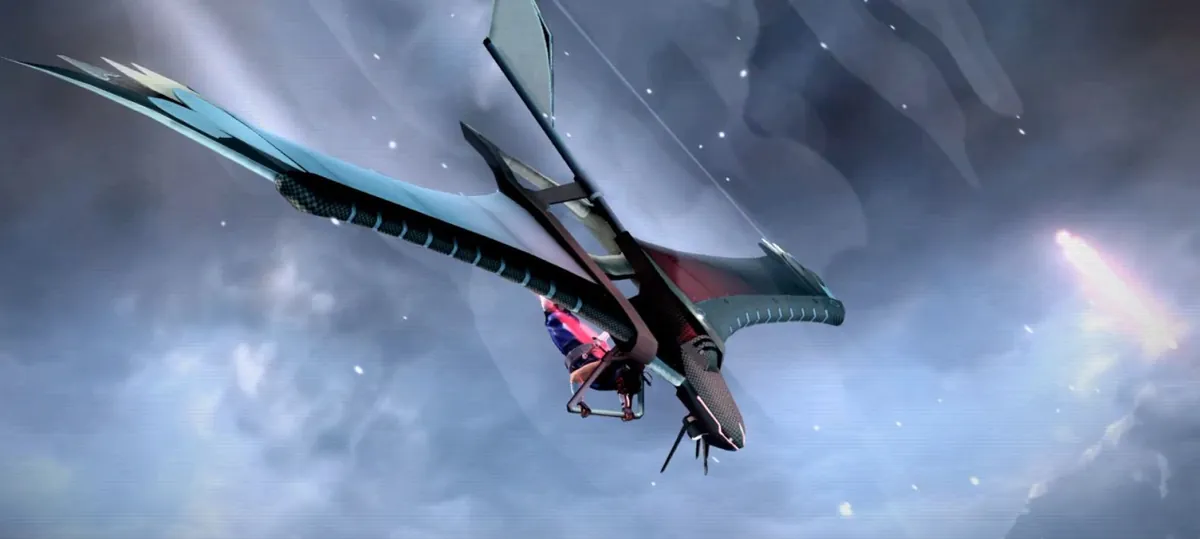
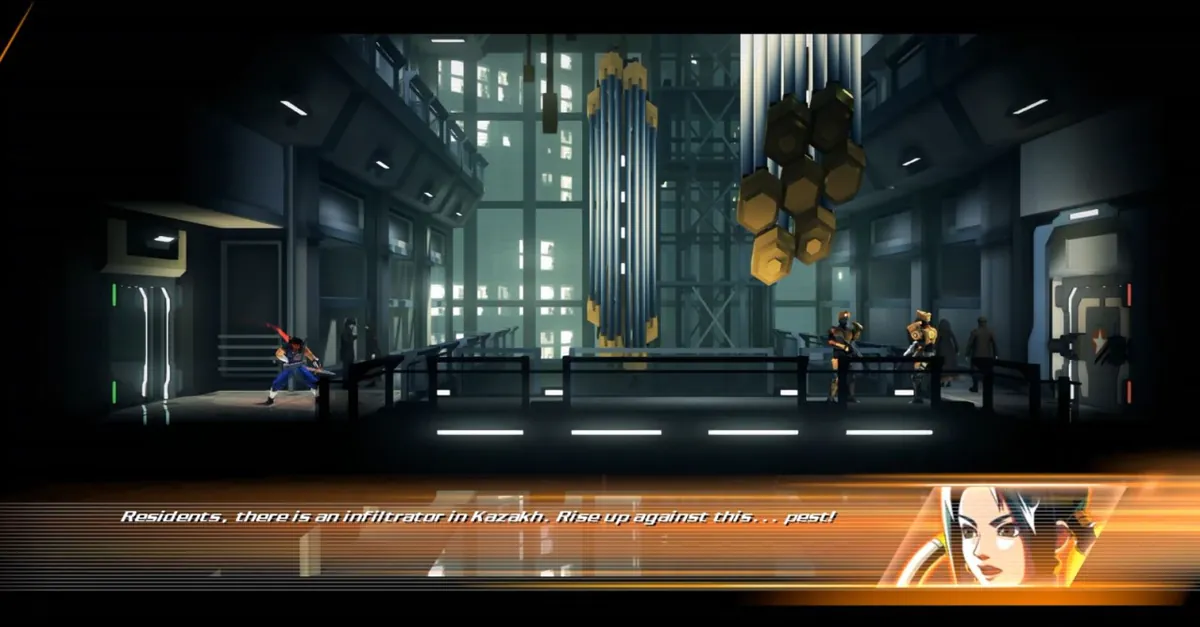
After a brief scene of the Protagonist Hiyru flying in to the fray, Strider literally hits the ground running. There is otherwise no intro, and the game never really stops to explain what’s happening. You have to piece together the plot from intercepting random propaganda drenched radio transmissions and from the brief boss introductions and exit scenes. While this old school style of jumping straight into the action isn’t hard to find in today’s indie scene, it’s still almost jarring to find it in a game with such high production values. It’s a great way to present Strider, since it amplifies the immersion of being a Ninja in a new place with only one plan – fight the bad guys and find their boss.
Hiyru’s main mode of attack is a crescent shaped blurry swing of his sword that you can fire rapidly, and move at your top speed while doing so. Each strike has a stun effect, so while on higher difficulties it takes a good number of hits to take down even the lowliest grunt, one strike to their face is enough to seal their fate. The challenge outside of boss fights is thus dealing with large groups of soldiers, but Hiryu’s acrobatic agility let’s you time your hits between them to keep their gunfire suppressed. You will gradually get new weapon upgrades and powers that add welcome complexity to this loop, but the action is always the think-on-your-feet kind. It’s never slow enough to make it about cerebral strategy; you just have to move. Because of the chaos such speed can create, Strider mitigates the frustrations of mistakes by providing ample opportunities to restore your health through mild exploration. Take down a group of soldiers wielding rocket launchers, take a few to the face in the process, and then duck into a nearby air duct to find floating orbs that heal you when broken. It’s incredibly frenetic, and I recommend playing it on a high enough difficulty to suit you, to truly enjoy its potential.
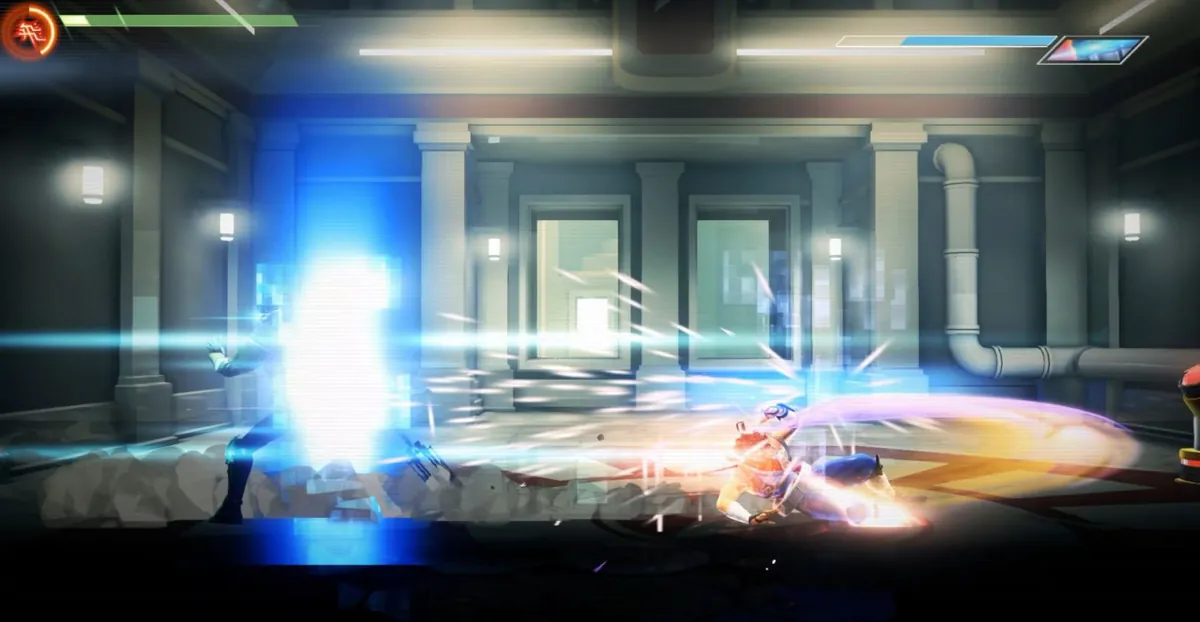
The boss fights are an absolute highlight for this gameplay style, with many of them showing just as much agility as the protagonist. At first, Hiryu’s available “thousand cuts” strategy might seem a little restrictive when trying to take down the larger HP pools, but it only highlights the usefulness of later abilities that do a little more burst damage. The bosses follow familiar pattern-based phases of attacking relentlessly and then providing a good opening for our hero to do his work. You do get one ability pretty early on that becomes something of a dominant strategy thanks to the amount of damage it deals, but it’s tied to your energy meter, thus still requiring you to have a plan B while you’re waiting or attacking to recharge it. There is a little bit of repetition in the boss encounters – you fight some of the same bosses multiple times – but there are enough absolutely excellent ones (including the final encounter) that this is more of a minor nitpick.
One of my personal favorite parts about the bosses is their role in the game’s flamboyantly cliche plot. Each of them taunts Hiryu with how much they’re going to kill them, and Hiryu always responds with how much they’re not – with the kind of confidence that an adult has when challenging a child. It’s the kind of campiness that I think Capcom has become known for. Strider knows what it is, and it’s completely unapologetic about it. Brazenly evil fascist forces have gathered together innumerable loyal soldiers to oppress the freedoms of the people, and the only solution is a one-man army Murder Ninja. It’s video game story perfection for a game like this.
While the combat and plot is perfect for that cheesy action movie style experience, the exploration unfortunately can be a little bit pace breaking. Adding Metroidvania-style exploration to anything is of course something that falls into my personal niche, but for a game like Strider, it can sometimes feel in the way. Especially if you’re playing on harder difficulties, you’re going to want as many max health and energy upgrades as you can get. For the most part if you’re diligent with pausing the game and checking your map, the game is very helpful in showing you exactly where you can find crucial upgrades. Unless you realize this early on though, there’s a good chance you’ll miss something – not to mention the few items you can’t get the first time through – and backtracking just isn’t the same kind of fun as charging forward. A lot of the game’s level segments are linear platformer style obstacle courses, full of spinning blades and other health draining traps. Since you can’t just tank through them, it significantly slows down your scouring the the hallways for secrets. For the most part the game seems to recognize this limitation and provides shortcuts if you have later upgrades when returning to an earlier area, but it doesn’t completely avoid the problem. Fast travel is also very limited, requiring a pretty long walk back to the entry points any time you do deeper exploration.
I think that every action game needs a roller coaster pacing; slow moments need to be juxtaposed against the insanity to prevent burnout or boredom from jading. While I don’t think Strider completely nails it, using Metroidvania exploration is still a great way to provide these slower moments. Besides, being a Strider is about being a Ninja, and while this game’s primary interpretation of that is slicing enemies in half, infiltration is part of the identity. Crawling into passages that no human normally goes to get to your destination safely captures that infiltration feeling nicely. Climbing on ceilings and walls feels often feels just as empowering as taking down a ludicrous anime mecha with just your sword. While not necessary for the gameplay, it’s appropriate that the game’s optional collectables include enemy log entries – as if one of your roles is to also gather intel. Overall I think it’s to Strider’s benefit that it has the level design that it has.
I think fans that prefer the extremes of the two niches that Strider caters to might be a little disappointed that one seemingly “spoils” the other. However, if your tastes include both, Strider is a very fun combination. It’s pure action served up with a side of Metroidvania that you can have as many helpings of that you want – or you can just play it straight through and still have a good time. The exploration does lead to even more gameplay in the form of separate challenges you can tackle, but I think the main campaign is still satisfying enough to justify the admission price all on its own. Definitely don’t overlook this game if you enjoy old school arcade action, but if you also enjoy a little exploration it’s even better.
Difficulty
How hard is Strider (2014)?
Not really. Strider (2014) scores 29/100 on our difficulty scale (#187 of 207). Gentle challenge — a good pick for newcomers to the genre.
- Our review: rated low, medium difficulty (the range reflects its difficulty settings).
- Steam players: 21% of 167 English reviews describe it as hard, 19% as easy — harder-rated than 16% of games here.
- Offers multiple difficulty modes, so you can tune the challenge.
Final verdict
Strider (2014)
A pure adrenaline filled power trip with that signature Capcom campiness. It will provide ample excitement from start to finish, or you can take a break from that to find more collectables.
Metroidvania breakdown
Combat
4/5Combat is fast and frenetic, and keeps you on your toes. Maybe a little too fast to be really strategic, but will definitely provide some challenge for those looking for it
Platforming
3.5/5At least with the default analog controls, Strider Hiryu can feel a little hard to land with precision accuracy, but it's not enough to spoil what is overall fun.
Exploration
3.5/5While it can be a pace breaker for the action, and backtracking can be a little tedious, there are hundreds of collectables, with many being very important to your success.
Puzzle
3/5Mostly lock and key puzzles that generally don't detract from the game's main focus of fast paced action
Story
3/5It's ''A Hero fights the Baddies'' plot done with the same gusto as many other Capcom projects. Fun and light hearted.
Graphics
4/5Occasionally the gaudiness of the 2.5D graphics can be distracting from exact hitboxes, but it's overall attractive.
Music
4/5A mix of new music and excellent remixes of classic Strider. Its style matches the gameplay perfectly
Replayability
3/5Multiple difficulty modes might entice another full playthrough, but Strider is more about collecting challenges and tackling those.
Strider (2014) was played on Steam on the hardest difficulty level
Further reading
If you liked Strider (2014)
All reviews →
Castlevania Anniversary Collection
Its only "Metroidvania" game, Simon's Quest, may be skippable for most players, but the rest of these games are must have hard-but-fair classics. Save states help with accessibility.

Castlevania Bloodlines
A hidden gem from the vaults of Konami's accomplishments. A fun alternative to the rock hard difficulty of other Classic-vania games.
Castlevania: The Lecarde Chronicles 2
A delightful marriage between Classicvania and Metroidvania that will surely please fans of both. Challenging combat and a deep world to explore make for a wholly memorable game.